"I was just a kid. I was a kid who was just trying to get a bag of chips. But at that moment, I wasn't a kid. I was a criminal. I was a threat. I was everything they wanted me to be."
— Rashad Butler
Friday night. You stop at a corner store for chips before heading to a party. Someone trips over you. The chips fall. Suddenly, a police officer slams you to the ground and beats you brutally. No questions asked. Just violence based on assumptions about your race.
What if this was you?
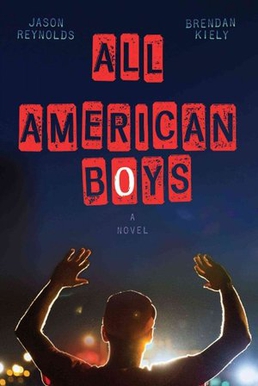
All American Boys is told through the alternating perspectives of Rashad Butler, a Black teenager brutally beaten by a police officer, and Quinn Collins, a white student who witnesses the assault.
The story examines how one act of police brutality fractures a community, forces students to confront racism, and challenges individuals to decide whether to stand up for justice.
Our Vision
Creative Vision: Make an interactive website that dives into racism in All-American Boys and includes stories and real-world connections to make people think and make relations.
Target Audience: The people who are particularly affected by the system of ideological oppressions, like racism and classism and certain ethnic groups that could relate to the problems that Rashad and or Quinn go through. To make them feel heard.
Main Characters
Rashad Butler
A 16-year-old Black ROTC student who is violently assaulted by police based on assumptions tied to his race.
Quinn Collins
A 16-year-old white student and basketball player who witnesses the assault and must navigate loyalty, guilt, and the choice to become an ally.
Soundtrack
This song captures the emotional journey of pain, resistance, and hope throughout the story:
"I Can't Breathe" - H.E.R
The System Exposed
The main system of oppression that All American Boys ties into is mainly ideological, given the fact that the book ties into racism and also classism in many parts of the book. Racial profiling and stereotypes plays a huge role in the main system of oppression because the novel illustrates how Black characters (like Rashad) are majorly viewed in a lens of suspicion, mainly labeled as "thugs" or even dangerous, regardless of how they act, or treat another person, it's as though they're living in a stereotype they didn't create but have to live through.
The main oppression in "All American Boys" is ideological oppression because of racism and classism. It shows how racial profiling and stereotypes make Black characters like Rashad seem like "thugs" no matter what they do. It traps them in stereotypes and holds them back.
Key Evidence from the Text
Quote 1:
"My father had always told me, 'Rashad, if you ever get stopped by the police, you do exactly what they say. You don't talk back. You don't move too fast. You make sure they can see your hands.'" (Rashad)
Quote 2:
The most powerful ideological shift occurs when the students refuse to accept the system's silence.
"RASHAD IS ABSENT AGAIN TODAY." (The Graffiti)
Quote 3:
"I was just a kid. I was a kid who was just trying to get a bag of chips. But at that moment, I wasn't a kid. I was a criminal. I was a threat. I was everything they wanted me to be." (Rashad)
The 4 I's of Oppression
IDEOLOGICAL - Beliefs & Stereotypes that Justify Oppression
How it appears in the book: When Rashad is in Jerry's corner store, a woman trips over him, and the police officer, Paul, immediately assumes Rashad is attacking and stealing, and before Rashad could explain this easy misunderstanding he's on the ground and beaten, no questions asked, but Paul instead assumes based on the color of his skin.
Real-world connection: This sort of mirrors the real life concept of implicit bias where Black children are seen as older and more aggressive compared to other peers. Also examples are Trayvon Martin and Tamir Rice.
This is important because ideological oppression is where it all stems from. If people think Black teens are dangerous, then that justifies the actions that discriminate against them. It's like a base that holds up against all the other types of oppression.
How it appears in the book: The media on the report for Rashad's case immediately mentions Rashad's baggy clothes and also the fact that he was resisting to try and make it better for the cop to seem less guilty, then the media focuses on the cop's background and his clean record while leaving Rashad's brokenness not as a priority.
Real-world connection: Just like in the real world most cases are slept under the rug, like Michael Brown or Eric Garner. Prosecutors work closely with news anchors, creating many conflicts to grand juries, often resulting in no result for the victim.
When institutions protect bad cops, it sends a message that lives being affected by them don't matter as much. This reinforces the ideological beliefs and makes it harder for individuals to speak up as they won't be backed up.
INTERPERSONAL - Individual Actions Between People
How it appears in the book: During the time of Rashad's injury, the basketball team becomes a huge example of interpersonal conflict. Players that were loyal to Paul like Guzzo physically and socially intimidate the people who support Rashad.
Real-world connection: In the real world we mainly see interpersonal oppression in schools and or workplaces, mainly people see injustice or down right racism and look to the other room because they don't want to lose their image or friends that they had. This sort of social pressure acts as a tool to maintain the oppression by weeding out the people who try to stand up for what's right.
This type of oppression is powerful because it makes you choose between doing what's right and keeping your friends. When Guzzo threatens people who support Rashad, he makes sure everyone stays quiet, and this continues the institutional and ideological oppressions.
INTERNALIZED - When Oppressed Groups Believe Negative Messages About Themselves
How it appears in the book: A huge example of internalized oppression in the book is the message that Rashad's father tries to drill into Rashad's head ever since he was little, lecturing how to speak proper, dress and the methods to avoid the police as much as possible. He hates Spoony's (Rashad's older brother) dreadlocks and baggy clothes because of the appearance it could give to other people like cops. Even when the father hears about Rashad's arrest he asks "What were you doing?", even though it was clearly the police officer's fault. Assuming Rashad did something to provoke the cop but that was not the case.
Real-world connection: This connects to the real world through respectability politics, the belief that a person must act, dress, speak a different way to not be seen as a threat to others, even though it is not who they are. Many older Black generations have had to adopt stricter "survival" skills to try and get by and just live without getting persecuted for the color of their skin.
This is how oppression keeps itself alive when nobody's watching. If Black people consider themselves as discriminated and discriminate against themselves, the system won't have to work as hard. This is the result of living under such oppressions for so long.
Breaking Point: When Trauma Peaks
Specific Scene/Moment
Rashad's beating at the store and hospital stay.
Why This Is the Climax
It splits the community and forces Quinn to choose sides. Bringing a concept of imbalance to the story leaves the reader on edge, if Quinn picks the "right" side or not.
Emotional Impact on Character
Rashad feels broken and angry not only physically and mentally but literally, he was beaten due to police brutality without even being given a chance, it puts them in the mindset that being beaten for being who they are is "ok". Also Quinn feels guilty and conflicted due to the decisions and choices he has to make throughout the story like for example choosing the sides he wants to be on in the book.
Resistance & Revolution
Individual Actions
Rashad shares his story and Quinn speaks up as a witness.
Community Responses
Students wear protest shirts and march for justice. There is also graffiti of events that are happening due to racism.
Systemic Changes (If Any)
Nothing directly but it sparks awareness and calls for accountability.
Interactive Story: Choose Your Path
The Beating
Its a Friday evening at Jerrys corner store and Rashad just wants to grab some chips before heading to a party. A woman in the store accidentally trips over him and the bag of chips falls to the ground. Officer Paul sees whats happening and immediately jumps to conclusions. He sees a black teenager and a white woman on the ground and without asking any questions or trying to figure out what actually happened he slams Rashad to the ground and starts beating him. Rashad doesnt get a chance to explain, he doesnt get a chance to defend himself, nothing.
I wasnt stealing anything, I wasnt doing anything wrong but none of that mattered.
Quinn's Dilemma
Quinn sees the whole thing go down. The problem is Paul isnt just some random cop, hes Quinns best friends brother and hes been like a father figure to Quinn since his own dad died. Speaking up about what he saw means risking everything, his friendship with Guzzo, his spot on the basketball team, maybe even his reputation at school.
What Would You Do?
You saw what really happened, you know the truth. What do you do?
The Cost of Silence
You decide to stay quiet and at first it seems like the easier choice. Your friendship with Guzzo stays the same, basketball practice keeps going like nothing happened, nobody gives you dirty looks in the hallway.
But something starts eating away at you inside. Every single time you see Rashads empty desk in class you feel it. Every time someone defends Paul and talks about how hes such a good guy you know the truth they dont know and it kills you a little bit more.
Speaking Truth
You decide to speak up publicly about what you actually saw and its terrifying because you know exactly what its gonna cost you.
Guzzo confronts you at practice and hes furious. How could you do this to my family he says and it hurts because hes been your friend for years. Other players on the team start taking sides and the whole team falls apart.
But then something else starts happening too. Students you dont even know come up to you and thank you for telling the truth. Rashads family finally knows what really happened and that somebody cared enough to say something.
Im not the protesting type but what type am I?
Private Confrontation
You try to find a middle ground by talking to Paul privately, maybe you can make him understand what he did wrong without making it a huge public thing.
Paul doesnt want to hear it though. You dont understand what its like out there he tells you. That kid was resisting. But you were there and you know thats not true, you saw everything and he wasnt resisting at all.
The conversation goes nowhere and you start to realize that private conversations arent going to change anything, sometimes you have to speak up louder.
The Movement
The students at school refuse to just accept what happened to Rashad. They start organizing, making art, wearing protest shirts and planning a march to demand justice.
Graffiti starts showing up all over the school that says RASHAD IS ABSENT AGAIN TODAY and the message is clear, his absence isnt okay and theyre not going to pretend like everything is fine.
Mirror to Society
What This Story Reveals About Our Current World
This story reveals the hardship and harsh realities young ethnic teens have to face for simply living in a world filled with police brutality and systematic racism.
Connection to Current Events
George Floyd (May 25, 2020)
George Perry Floyd Jr. was an African American man who was murdered by a white police officer in Minneapolis, Minnesota, during an arrest made after a store clerk suspected that Floyd used a fake twenty-dollar bill, on May 25, 2020.
Rashad being arrested by Guzzo's brother, Rashad was beaten brutally by a police officer based on an assumption, he was not resisting he was simply trying to breathe.
Like Rashad, George Floyd was accused of something minor. They both weren't resisting but still were brutalized.
Tyre Nichols' Death Sparks Calls for Reform (CNN)
Nichols was beaten by cops over a misunderstanding that was minor like with what happened with Rashad.
Tyre Nichols was pulled over for a traffic stop in Memphis and was beaten so badly that he passed away. This was similar to Rashad's beating at the store: it was something minor that resulted in something excessive.
Historical Examples
Rodney King Beating (1991)
Cops beat King brutally on video which led to riots similar to the book's division over racism.
Rodney King was beaten by the LAPD in 1991 after a car chase. A bystander recorded the whole thing on video, and the officers were still not found guilty. This is similar to the community in All-American Boys in how the community splits and protests after Rashad's beating.
Emmett Till Murder (1955)
Young Black teen killed over false accusation shows the history of racial violence towards the Black community.
Emmett Till was a 14-year-old Black boy visiting Mississippi. A white woman lied and said he whistled at her. Emmet was kidnapped by two white men and was killed.
What It Shows About Human Nature
All American Boys reveals human nature by exploring how people deal with prejudice, systemic injustice, and personal responsibility, which shows the conflict between being ignorant and confronting any actual harsh realities, and focusing on our bias and growth as the characters face any stereotypes, standing up to injustice, failing to stand up to injustice, and redefining what it truly means to be all-American beyond the skin color. The book deeply showcases the roots of fixed beliefs, the struggle with emotions especially anger and grief, and the journey from childhood to adulthood immaturity to a better understanding of humanity, both good and bad.
We see this when Quinn struggles with loyalty to Paul's family and telling the truth. This represents how, when people know the truth but find it easier to stay comfortable and quiet.
Warning or Hope for the Future
All American Boys should be a reminder to treat people equally, to treat people as human beings, that if events like these keep on happening to certain ethnic groups the events would end up being normalized, everyday a young teen will die of police brutality and it will be treated as "normal".
Community Voices: Interviews
We interviewed a member of our school community about racism, police brutality, and the themes in All American Boys.
Interview Responses
Question 1: What actions do you take to help prevent racism in our school?
"Personally I make sure that I include people in the things that I do and point out things that people say when it is racist."
Question 2: How does police brutality affect students like us in real life?
"In real life I think police brutality can screw students up mentally because they are told at a young age that police are good people but when some are bad then it makes us question who will protect us."
Question 3: What's the biggest challenge Black teens face with stereotypes today?
"I think the biggest stereotype is that some people think we are uneducated in many high ranking school the Black teen is very minimal whether that is due to the economic circumstances or just location preferences unfortunately due to the history of the US the Black community does have a major setback in the area of education."
Question 4: How can students be better allies against racism?
"The best way to be allies against racism is to stand up for those who can't themselves and support those who do stand up for themselves."
Question 5: What advice do you have for dealing with unfair treatment?
"The advice that I have for unfair treatment is to either educate people or encourage them to self educate on the subject of humans all be equally the same."
Take Action: What You Can Do
"Rashad is absent again today. That's not right. That's not okay."
All American Boys should be a reminder and warning to treat people equally, to treat people as human beings. If traumatic events keep happening to certain ethnic groups, the events will be normalized. We can't let that happen.
Our Call to Action
Join Movements
Support Black Lives Matter and fight for racial justice.
Speak Up
Don't stay quiet when you witness racism.
Educate Yourself
Learn about systemic racism and its history and how you can be a better ally.
Support BLM
Amplify Black voices, and show up for protests.
Remember
Being an ally means risking relationships and comfort. But it's necessary to stand up for those who can't themselves and support those who do stand up for themselves.
The question isn't whether you'll face injustice, it's what type of person will you be when you do?